


As a seasoned supplier of Power Distribution Boxes, I've witnessed firsthand the critical role these components play in electrical systems. A well - designed and properly connected power distribution box ensures the safe and efficient distribution of electrical power. In this blog, I'll delve into the various cable connection methods for a Power Distribution Box, providing insights that can help you make informed decisions for your electrical projects.
Direct Connection
The direct connection method is one of the most straightforward ways to connect cables to a Power Distribution Box. In this approach, the cables are directly terminated onto the busbars or terminals within the box. This method is often used when dealing with smaller - scale electrical systems or when the power requirements are relatively low.
To perform a direct connection, the cable insulation is first stripped to expose the conductor. The exposed conductor is then inserted into the appropriate terminal or clamped onto the busbar. It's crucial to ensure that the connection is tight and secure to prevent any loose connections that could lead to overheating or electrical arcing.
One of the advantages of direct connection is its simplicity. It requires minimal additional components, which can reduce costs and installation time. However, it may not be suitable for high - current applications, as the connection points can become a source of resistance, leading to power losses.
Plug - in Connection
Plug - in connections offer a more flexible and modular approach to cable connection in a Power Distribution Box. This method involves using pre - fabricated plug - in modules that can be easily inserted into corresponding sockets within the box. These modules are designed to carry specific electrical loads and can be quickly replaced or reconfigured as needed.
The plug - in connection method is particularly useful in applications where frequent changes or expansions are anticipated. For example, in a data center, where the power requirements of servers may change over time, plug - in modules allow for easy adjustment of the power distribution system.
Another benefit of plug - in connections is their ease of installation and maintenance. Since the modules are pre - wired and tested, they can be installed without the need for extensive electrical work. This reduces the risk of installation errors and minimizes downtime during maintenance. However, plug - in connections may be more expensive than direct connections, and they require careful consideration of the compatibility between the modules and the power distribution box.
Terminal Block Connection
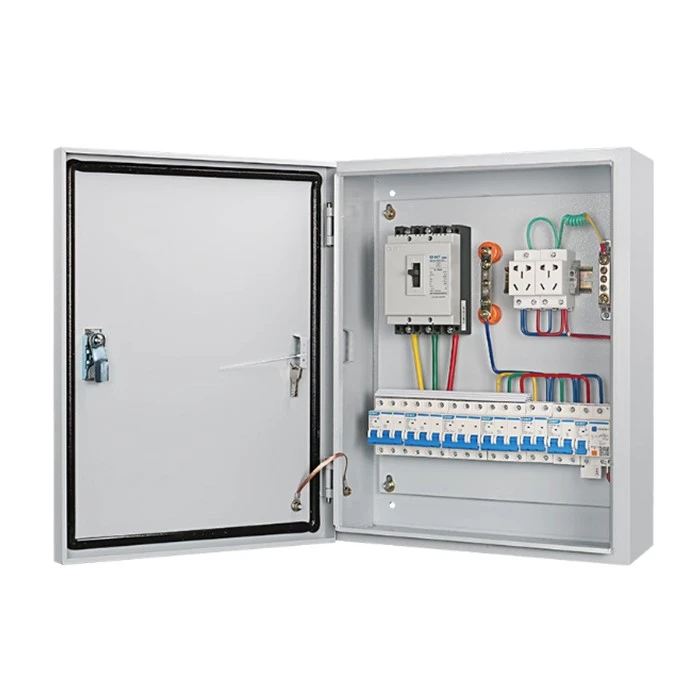
Terminal blocks are widely used in power distribution boxes to provide a secure and organized way to connect multiple cables. A terminal block consists of a series of metal terminals mounted on an insulating base. Each terminal can accommodate one or more cable conductors, allowing for the connection of multiple cables in a single location.
To use a terminal block, the cables are stripped and inserted into the appropriate terminals. The terminals are then tightened using a screw or a clamping mechanism to ensure a reliable electrical connection. Terminal blocks come in various sizes and configurations, allowing for different numbers of connections and current ratings.
One of the main advantages of terminal block connections is their versatility. They can be used to connect cables of different sizes and types, making them suitable for a wide range of applications. Additionally, terminal blocks provide a clear and organized way to label and identify the cables, which can simplify troubleshooting and maintenance. However, proper installation of terminal blocks is essential to prevent loose connections, which can lead to electrical problems.
Busbar Connection
Busbars are an integral part of many power distribution boxes, and they play a crucial role in the distribution of electrical power. A busbar is a thick strip of copper or aluminum that serves as a common conductor for multiple circuits. Cables are connected to the busbars using various methods, such as bolted connections or clamping devices.
Bolted connections involve using bolts to secure the cable conductors to the busbars. This method provides a strong and reliable connection, capable of handling high currents. However, it requires careful alignment and tightening of the bolts to ensure a proper electrical connection.
Clamping devices, on the other hand, offer a more convenient and quicker way to connect cables to busbars. These devices use a spring - loaded mechanism to clamp the cable conductors onto the busbars, providing a secure connection without the need for bolts.
Busbar connections are commonly used in high - power applications, such as industrial power distribution systems. They offer low resistance and high current - carrying capacity, which helps to minimize power losses and ensure efficient power distribution. However, busbars require proper insulation and protection to prevent short - circuits and electrical hazards.
Considerations for Cable Connection in Power Distribution Boxes
When choosing a cable connection method for a Power Distribution Box, several factors need to be considered.
Current Rating
The current rating of the cables and the connection method must be compatible with the electrical load. Using cables or connection methods with a lower current rating than required can lead to overheating and potential fire hazards.
Voltage Rating
The voltage rating of the cables and the power distribution box must also be considered. High - voltage applications require cables and connection methods that can withstand the higher electrical stress.
Environmental Conditions
The environmental conditions in which the power distribution box will be installed can also affect the choice of cable connection method. For example, in harsh environments with high humidity or corrosive substances, corrosion - resistant materials and connection methods may be required.
Future Expansion
If there is a possibility of future expansion or changes in the electrical system, a flexible connection method, such as plug - in connections or terminal blocks, may be more suitable. These methods allow for easy addition or modification of circuits without significant disruption to the existing system.

Conclusion
In conclusion, choosing the right cable connection method for a Power Distribution Box is crucial for the safe and efficient operation of an electrical system. Each connection method has its own advantages and disadvantages, and the choice depends on various factors such as the application, power requirements, and environmental conditions.
As a supplier of Power Distribution Box, Transformer Distribution Box, and Low Voltage Distribution Box, we have the expertise and experience to help you select the most appropriate cable connection method for your specific needs. Whether you're working on a small - scale residential project or a large - scale industrial installation, we can provide you with high - quality products and professional advice.
If you're interested in learning more about our power distribution boxes or need assistance with cable connection methods, we encourage you to contact us for a detailed discussion. Our team of experts is ready to help you find the best solutions for your electrical projects.
References
- Electrical Installation Handbook, Schneider Electric
- National Electrical Code (NEC), National Fire Protection Association
- Handbook of Electrical Engineering, McGraw - Hill


