In the process of doing photovoltaic projects, I found that many EPC general contractors and power station owners will commit the same problem when purchasing transformers: only look at the rated capacity on the sample, ignoring the actual working conditions on the site. This will cause frequent equipment overload, increased losses, and early damage. After the equipment is put into operation, the cost of rectification is much higher than that of making a good selection in the early stage.
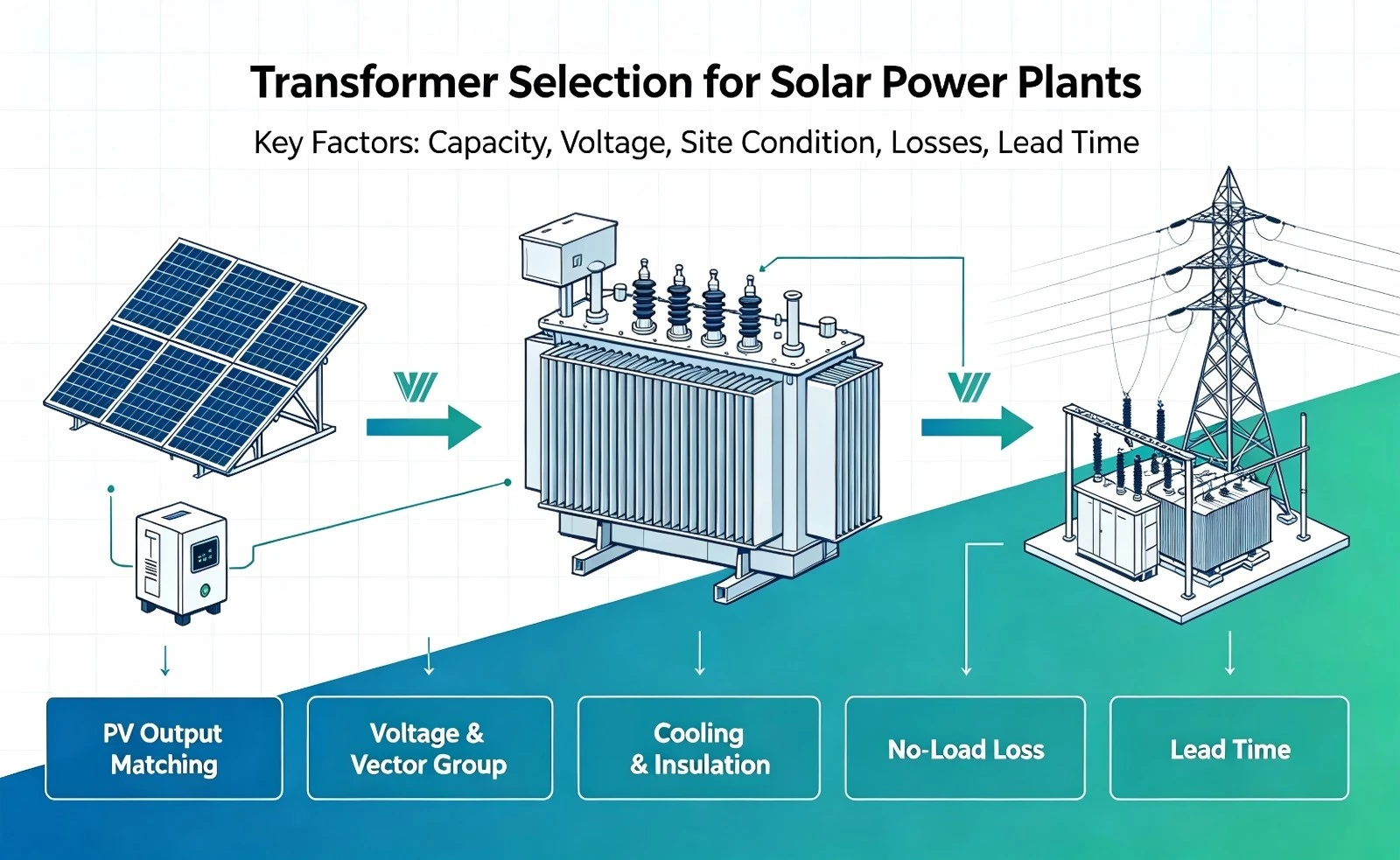
Photovoltaic power generation will continue to change with the light, so don't let the transformer capacity and the total installed capacity of photovoltaic modules be completely equal.The vast majority of large‑scale ground photovoltaic power plants on the market actually use 1.1-1.25 times the over-distribution coefficient in the industry. The transformer needs to withstand short-term power shocks and cannot overheat. Combined with the actual operation of the project, 5-10% of the capacity margin is generally reserved to cope with power fluctuations, and space is also reserved for later component expansion.
10kV and 33kV distribution transformers are widely used in distributed photovoltaic projects. The Dyn11 coupling group is most used in photovoltaic scenarios. It can suppress the harmonic current generated by the inverter, maintain the three-phase voltage balance, reduce the additional heat caused by harmonics, and protect other grid-connected electrical equipment.
Oil-immersed transformers are cost-effective and suitable for large-scale ground photovoltaic power plants with good ventilation conditions.Rooftop photovoltaic, indoor substations or sites with strict fire protection requirements are more suitable for dry transformers.
For high-temperature and high-altitude projects in the desert, F-class or H-class insulation is selected, and the capacity reduction treatment is done at the same time. Thin air will reduce the heat dissipation capacity; coastal photovoltaic power plants must be completely anticorrosive and resist salt spray erosion.
It is easy for many buyers to step on the pit here. Regardless of whether there is sunshine or not, no-load loss is continuously consumed 24 hours a day, 365 days a year, throughout the 25-year design life of the equipment. I have seen many project teams choose low-cost models after comparing prices. As a result, three or four years later, they found that the electricity bills consumed by no-load losses had already eaten up all the difference saved at the beginning. For long-term photovoltaic power plants, the early investment in low-loss transformers is higher, but most of them can recover the extra cost within 10 years of being put into operation. Be sure to verify that the nameplate parameters meet IEC standards, and don't just listen to the oral introduction of the sales.
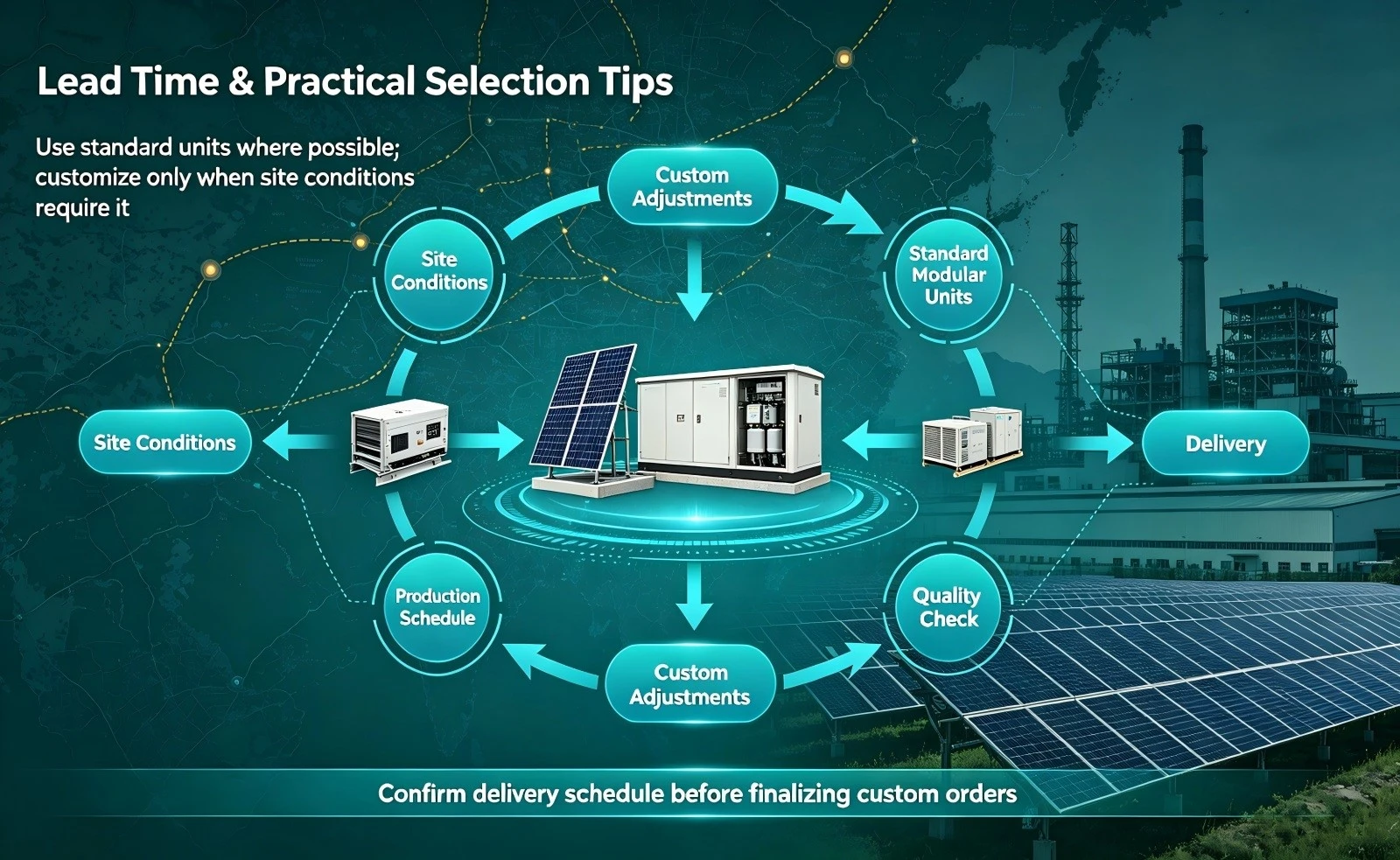
Fully customized transformers are prone to delivery delays. The construction window period of photovoltaic projects is very tight. If the equipment arrives two months late, it will not only cause small delays, but also cause grid-connected delays and loss of liquidated damages. It is now a common practice in the industry to choose standard modular models for most equipment, and only if the site does have special working conditions (extreme cold, desert high temperature, coastal corrosion, etc.) can it be fully customized. Before finalizing the customized order, first confirm the actual production inventory of the manufacturer.
One last reminder
There is no universal "optimal transformer". The truly suitable equipment is that there will be no frequent problems after two years of use: it matches the real photovoltaic output, adapts to the local climate, does not produce unnecessary losses at night, and can be delivered on time.